When choosing outdoor furniture, the tabletop often seems like a minor detail. In reality, it is the surface that takes the most abuse from sun, rain, moisture, and temperature fluctuations. This is especially true when the tabletop is combined with a metal frame, where different materials expand and contract at different rates.
In this article, we explore which tabletop materials perform best in Northern European and Scandinavian climates, and what trade-offs come with each option.
What Determines the Durability of an Outdoor Tabletop?
The lifespan of an outdoor tabletop depends on several interacting factors:
-
Moisture and rain – repeated wetting and drying stresses wood fibres
-
UV exposure – sunlight breaks down both wood and surface finishes
-
Temperature fluctuations – wood and metal react differently to heat and cold
-
Maintenance – even the best materials require some level of care
Scandinavian experience: what harsh climates teach us
In Nordic countries, outdoor furniture is typically designed around:
-
materials that age gracefully
-
solutions that do not require annual maintenance
-
simple, honest, functional design
This is why thermally modified wood and carefully selected composite materials are also logical choices in Estonia and across Northern Europe
Solid Wood as an Outdoor Tabletop – Which Species Last the Longest?
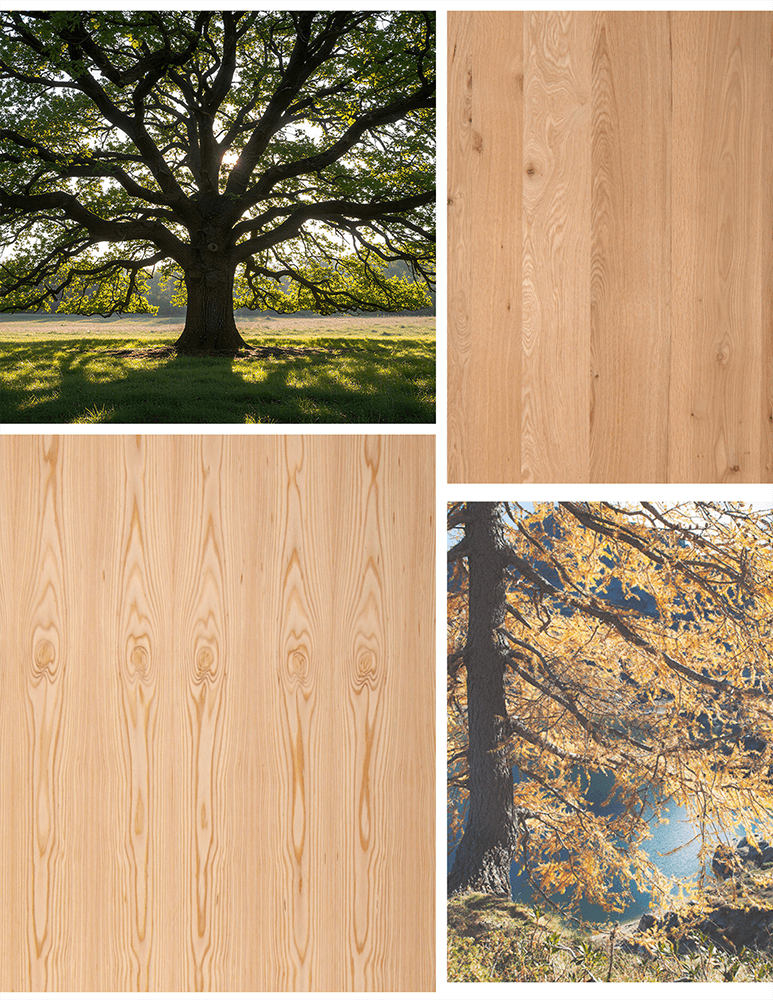
Larch as an outdoor furniture material
Larch is popular in Northern Europe due to its natural resin content.
Pros
-
good resistance to moisture
-
suitable for outdoor use
Cons
-
prone to cracking if not properly dried
Oak in outdoor conditions
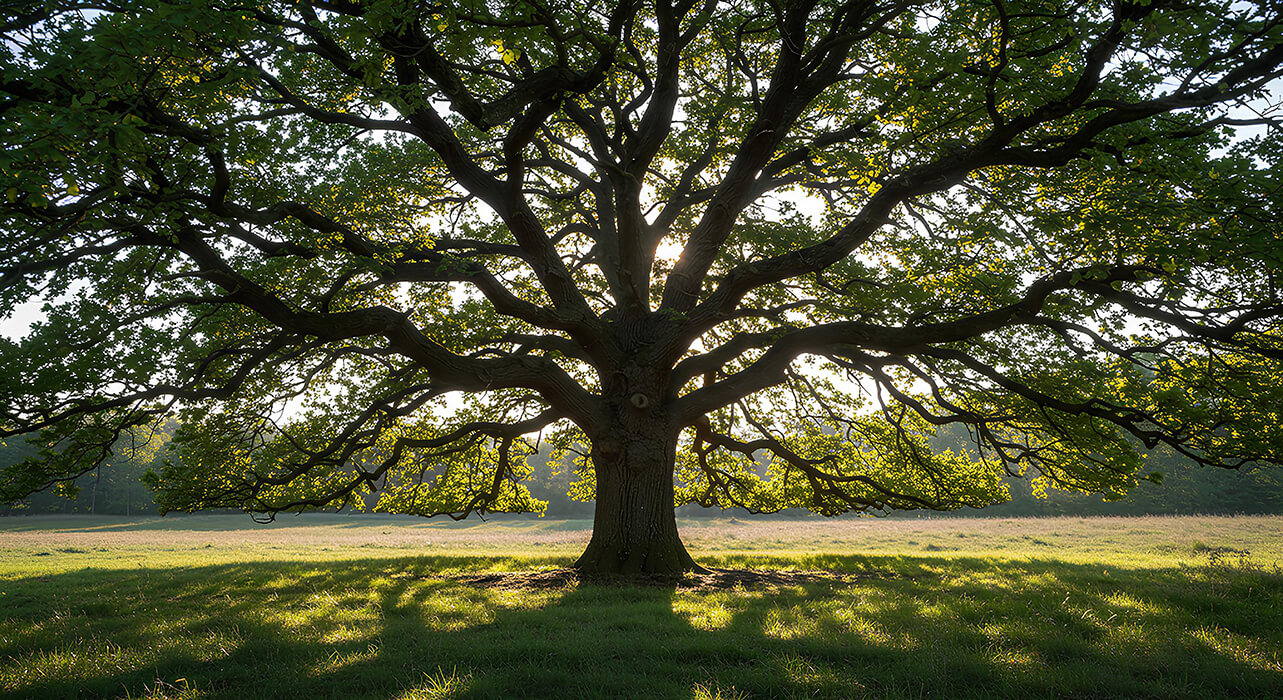
Oak is a dense and mechanically strong hardwood.
Pros
-
excellent structural strength
Cons
-
reacts noticeably to moisture changes
-
heavy and relatively expensive
Softwoods (pine, spruce) – when do they make sense?
Pros
-
affordable
-
easy to work with
Cons
-
require regular surface treatment
-
shorter lifespan in harsh climates
Conclusion: solid wood is a good choice if regular maintenance is acceptable.
How to Finish Solid Wood for Outdoor Use
Untreated wood does not perform well outdoors.
Common finishing options include:
-
Oils – enhance wood grain but require frequent reapplication
-
Wood protection treatments – improved UV and moisture resistance
-
Paints – longest protection, but hide natural wood texture
Typical maintenance intervals range from once every 1–2 years.
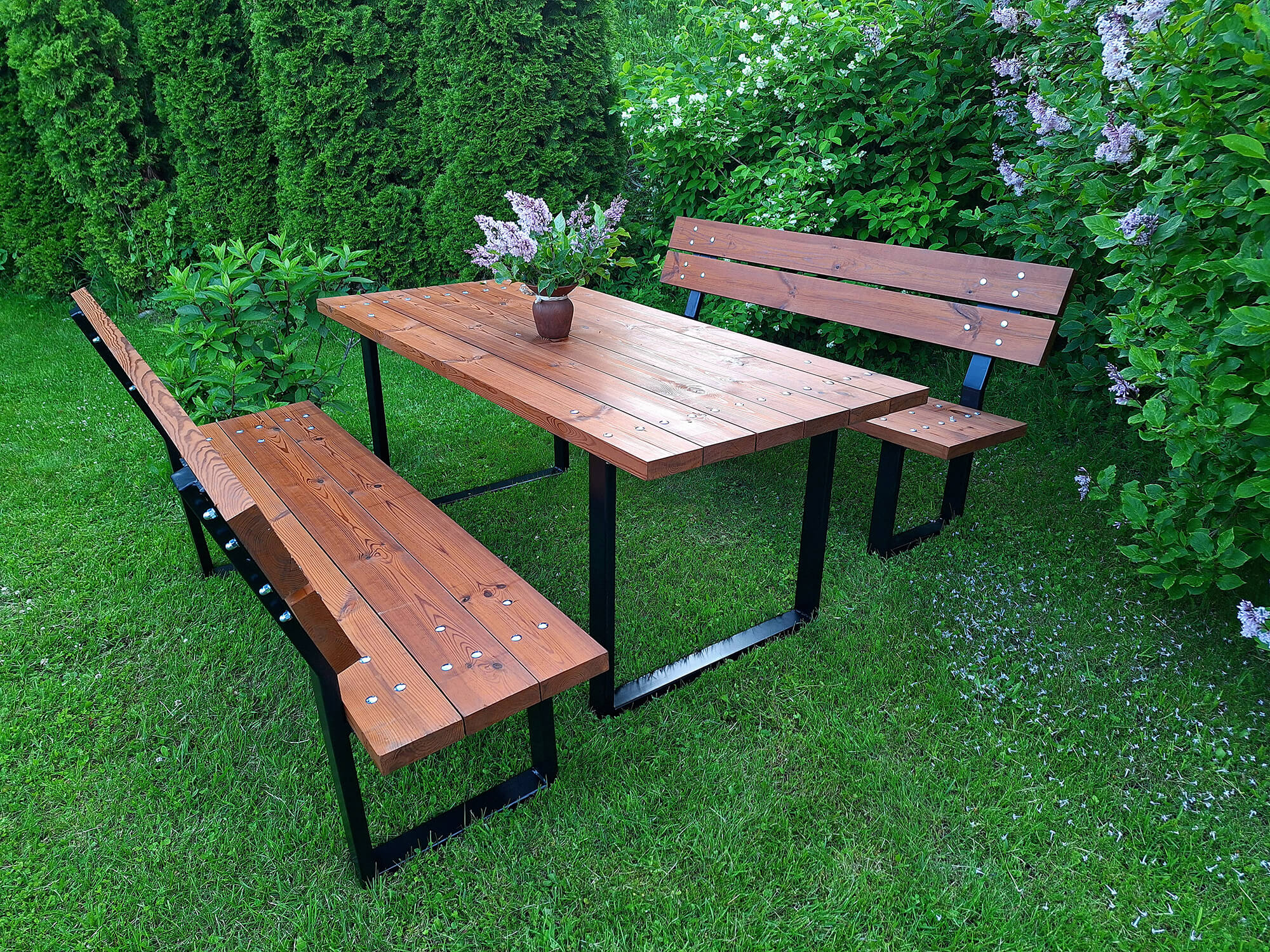
Thermally Modified Wood (Thermowood) for Outdoor Furniture
Thermowood is heat-treated wood with significantly reduced moisture content and dimensional movement.
Advantages of thermowood
-
improved dimensional stability
-
lower risk of cracking
-
well suited for metal-frame constructions
Disadvantages
-
slightly more brittle than untreated wood
-
turns grey if left unfinished
Thermowood is widely preferred in Scandinavia because it handles cold and wet climate cycles more reliably than untreated timber.
How to Finish Thermowood for Outdoor Use
Thermowood is more durable, but not maintenance-free.
-
unfinished thermowood develops a natural grey patina
-
UV-protective oils help preserve its original colour
-
maintenance requirements are lower than for solid wood
Many Scandinavian manufacturers accept greying as part of natural ageing rather than treating it as a defect.
Is Composite a Good Choice for Outdoor Tabletop Surfaces?
Composite materials are made from a mixture of wood fibres and plastic.
Pros
-
highly weather-resistant
-
low maintenance
-
does not crack
Cons
-
can heat up in direct sunlight
-
less natural appearance
-
difficult to repair
Composite tabletops are well suited for public spaces and high-use environments.
Solid Wood vs Thermowood vs Composite – A Practical Comparison
-
Durability: Composite > Thermowood > Solid wood
-
Maintenance: Composite (minimal)
-
Appearance: Solid wood (warmest, most natural)
-
Best balance: Thermowood
The right choice depends on whether you value low maintenance or a natural look and feel.
Alternative Materials for Outdoor Tabletops
-
Ceramic and stone – extremely durable, but heavy and cold to the touch
-
Metal surfaces – industrial look, may overheat in sunlight
-
Hybrid solutions – combine aesthetics with functionality
These options are typically exceptions rather than standard solutions.
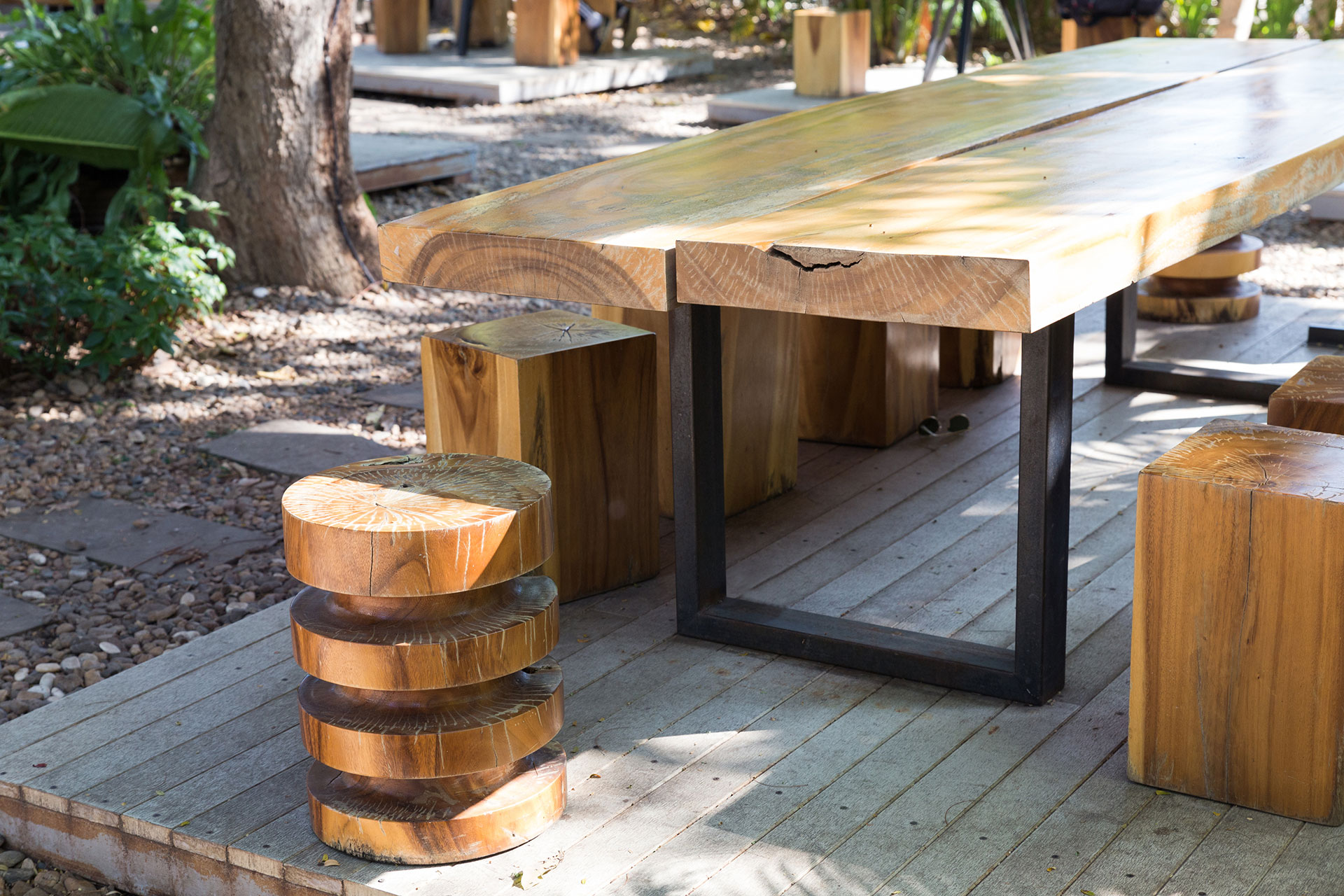
Conclusion – Which Material Is Right for Your Outdoor Furniture?
-
Want a natural appearance → solid wood
-
Looking for balance between durability and aesthetics → thermowood
-
Need maximum durability with minimal maintenance → composite
There is no single “best” material — only the right material for a specific use case.