Growing Herbs and Culinary Plants Indoors – Possibilities and Realities
We often see ads and articles promising: “Grow herbs in your kitchen all year round—always have fresh greens at hand!” The idea is highly appealing, but how realistic is it really? This is where a healthy dose of realism and self-reflection comes into play.
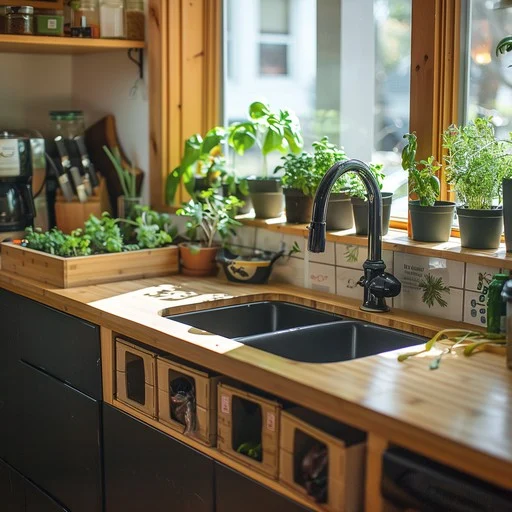
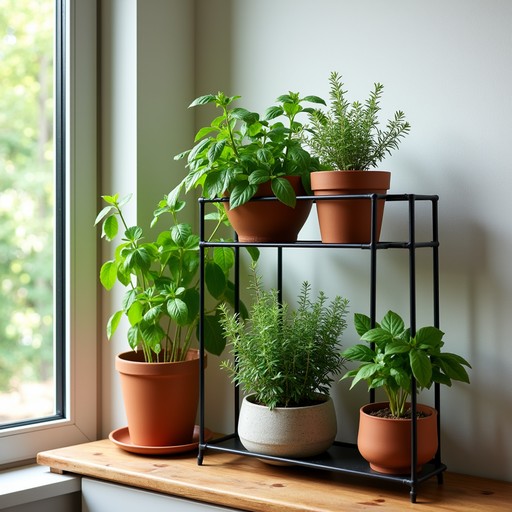
First of all, as discussed earlier, growing herbs indoors in winter is challenging. While in summer we can happily pinch basil leaves from the balcony, a December basil plant on a windowsill is often just a pale shadow of its former self. Survival often becomes the goal, rather than active, productive growth. For example, a rosemary pot in the living room may not produce new shoots in winter, but it can keep its needles green enough for you to snip off a small sprig for soup now and then. Can this be called “fresh herbs all year round”? Technically, yes—the plant is alive and provides something—but compared to lush summer growth, it is minimal.
Some herbs do perform better indoors during winter than others. Mediterranean evergreens (rosemary, bay laurel, thyme) are accustomed to lower light levels and cooler conditions in their natural habitat—they have a natural rest period. If you provide similar conditions (keep them in a cooler room and avoid overwatering), they can survive the winter well and may even produce a few delicate shoots. Parsley is cold-hardy, and a plant kept in a pot on a cool veranda can stay green for a long time; it can quite confidently be grown “year-round” if you pot up a plant in autumn and bring it indoors. Mint (peppermint), on the other hand, actually prefers to rest in winter—kept warm indoors, it often struggles, may drop its leaves, and seems to wait instinctively for spring. In that case, what you really have is more of a “living root ball in a pot” that will sprout again in spring, but in the meantime offers very little fresh growth.
The popularity of year-round indoor herb gardens has also brought smart solutions to the market, such as small hydroponic systems with LED lights. These provide plants with a constant supply of water, light, and nutrients—like a miniature “herb farm” on a kitchen shelf. Under such conditions, basil really can thrive in February as impressively as it does in July in the garden. However, this requires technology, commitment, and additional electricity for the grow lights. Many hobby gardeners still prefer a more natural approach: growing herbs seasonally and accepting their seasonality. That means enjoying abundance in summer—when dill and basil are plentiful outdoors—and in winter being content with a few pots on the windowsill for a touch of green, while covering the rest of your flavor needs with dried or frozen herbs.
It has even been said that overwintering herbs indoors are more like pets than a real vegetable garden. They offer visual pleasure, a sense of greenery, and pleasant aromas, but you shouldn’t expect a big harvest from them. From an analytical point of view, this makes sense: plant growth depends on photosynthesis, and without sunlight, there is little growth. So unless you invest in proper supplemental lighting, winter herbs tend to be more symbolic than productive. That doesn’t make them useless—on the contrary, the first fresh green leaf from your own windowsill in January can bring great joy and a little “vitamin boost” to the soul. That, in itself, is a value, even if you can’t gather large bunches for the soup pot.
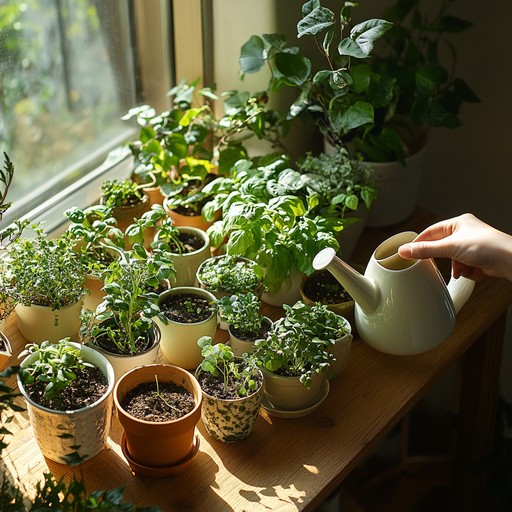
Container Gardening in the City: Arguments and Examples
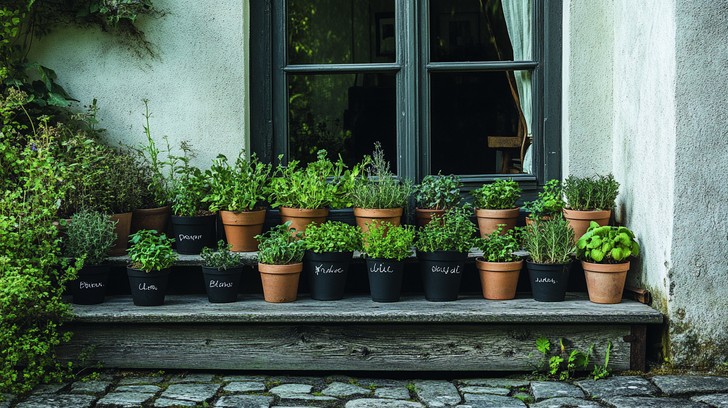
In an urban environment, growing herbs in pots is often the only realistic option—for many people, a balcony or windowsill in an apartment building is the only space available. But is container gardening actually the better choice? Many gardeners believe so, and not only because of limited space. Pot cultivation has its own appeal that makes it an ideal solution for city dwellers.
First of all, as mentioned earlier, container gardening offers flexibility. Urban conditions can change from one moment to the next—a tall building can cast shade for half the day, or a narrow courtyard can funnel wind like a corridor. When plants are grown in pots, however, their “home” can be moved: if there is plenty of morning sun in one corner, the herbs can be placed there; if the midday heat threatens to dry out the soil, the pots can be shifted into the shade. This kind of mobility is a major advantage over garden beds in the ground, which cannot be moved. Cities often also have a slightly milder microclimate—asphalt and concrete store heat, and building walls provide shelter from the wind. As a result, plants grown on balconies can sometimes grow faster than those in an open, wind-exposed garden in the countryside. Tomatoes and peppers, for example (not herbs, but vegetables), often produce better yields on city balconies because of the accumulated warmth. In the same way, a balcony can be a pleasant spot for herbs: near a wall, temperatures can stay a degree or two warmer at night than in open spaces.
A second argument is cleanliness and control. Growing plants in pots in the city allows you to choose exactly what kind of soil your plants grow in. By buying high-quality potting mix or blending your own soil, you can avoid some of the random pests and plant diseases that can spread in open ground. Weeds are also very limited in pots. For example, if you grow parsley on a balcony in the middle of a city, there is no need for weeding—unwanted “guests” rarely sprout in containers, and if they do, they are easy to spot and remove. Pest control is also more manageable: aphids, for instance, are less likely to invade a tenth-floor balcony as aggressively as a garden plot (although, to be fair, they can still find their way there). Pots can also be isolated if needed—if one plant becomes diseased, it can be moved away from the others. In a city setting, where many gardeners are beginners learning by trial and error, this modular approach offers a sense of security.
A third advantage is aesthetics and order. In urban spaces, people often want everything to look stylish and tidy, while a traditional garden bed can inevitably become a bit wild toward the end of the season. A container garden, on the other hand, allows you to design your balcony or terrace as a small, curated garden: you can choose matching pots, arrange them on stepped shelves like a tiered bed, and add trellises or frames for climbing plants. Overall, a balcony herb garden can function as a kind of living decoration. Many urban gardeners also like to mix herbs with ornamental plants: a pot of lavender is both beautiful and useful—it attracts bees, offers fragrant visual appeal, and its flowers and leaves can be used as well. This kind of ornamental kitchen garden suits city life, where space is limited and every element ideally serves more than one purpose.
Of course, container gardening also has its drawbacks. When you go on summer vacation, you need to find someone to water your pots—otherwise, you may return to dried-out stems. Fertilization can also become an issue: rain does not leach excess salts from potting soil the way it does in open ground, so container gardeners need to be more careful with dosing to avoid over-fertilizing. That said, modern urban living offers smart solutions for this as well—drip irrigation systems for balconies, self-watering pots, and balcony boxes with built-in water reservoirs. These tools help make container gardening convenient even for people with a fast-paced city lifestyle.
Ultimately, what matters most is that even in the city, it is possible to create a personal gardening experience—whether it’s on a small balcony or a wide windowsill. A container garden can provide just as much satisfaction and fresh herbs as a large plot of land, and for many young or beginner gardeners, it is the first step toward developing a true “green thumb.”


Light, Watering and Temperature: Practical Tips
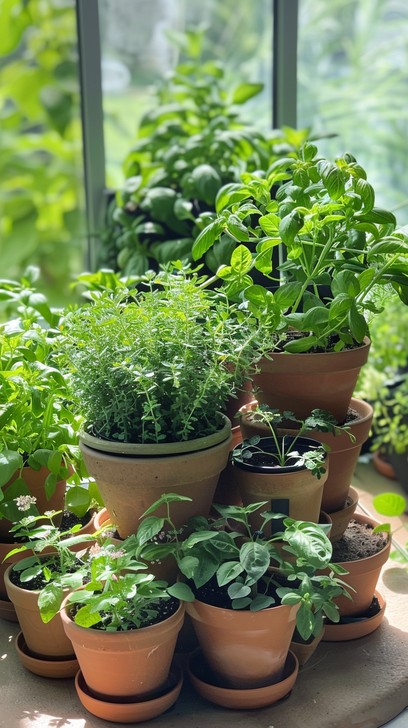
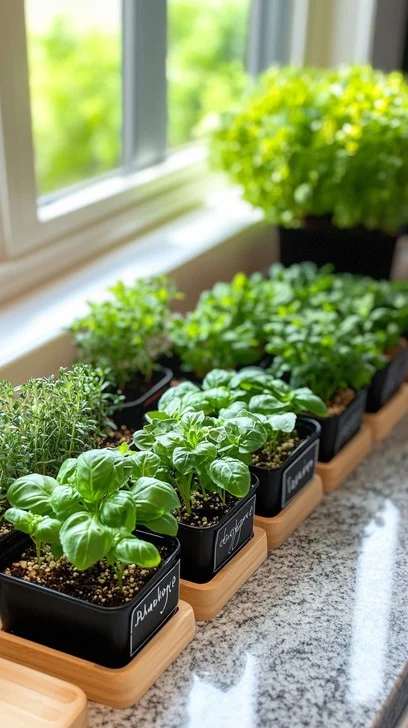
Every herb has its own “personality”, but their needs can be grouped in broad terms. For most culinary herbs, light is the key factor—many of them love sunshine. A good rule of thumb is that 6–8 hours of direct sunlight a day produces the most aromatic leaves. Mediterranean herbs such as thyme, rosemary and oregano prefer full sun; in shade their growth becomes weak and they build up fewer essential oils, which means less fragrance and flavour. Still, some herbs tolerate shade better: lemon balm and mint cope well with partial shade, and even parsley can grow quite happily in a north-facing window with mainly indirect light. In fact, cooler partial shade is preferable for certain plants. Coriander, for example, often benefits from protection from the midday sun in summer—otherwise it overheats and bolts (starts flowering) instead of producing leaves.
If natural light isn’t enough (especially indoors), artificial lighting can make a big difference. Basil, for instance, has high light requirements—it comes from tropical regions where days are long and intense. If you try to keep basil indoors in winter with natural light only, it often becomes leggy as it stretches towards the window. Adding a grow light that provides an extra 4–6 hours of “daylight” can work wonders: stems stay shorter and leaves grow larger, meaning a more compact, stronger plant. Choosing the right spectrum matters—specialist grow lights often have a purplish hue (a mix of blue and red) that suits photosynthesis best. For home use, full-spectrum LED lamps are also common; they produce a more neutral white light and look nicer in a kitchen setting.
Watering is where the “golden middle” applies. Most herbs dislike waterlogged soil, especially Mediterranean species with woody stems (rosemary, lavender, thyme). Their natural habitat is often stony, fast-draining ground; too much moisture can rot the roots and the plant may die from too much “love” rather than too little water. On the other hand, herbs with lots of soft leaves (such as mint and basil) are quite thirsty—large leaf mass means more water loss, and they wilt quickly if the soil dries out. A practical tip is to water in the morning or late morning, so the plant can take up moisture before the midday sun stresses the leaves. Evening watering can also work, but then it’s important not to leave the foliage wet overnight in cool conditions, as this can encourage disease (such as mildew). If you grow herbs in containers, make sure the pots have drainage holes—standing water at the bottom of a pot is fatal for many herbs.
One extra trick: water quality. Rainwater is softer and often better tolerated by herbs than chlorinated tap water. If you can, even in the city, it’s worth occasionally watering with collected rainwater (for example, catching some on the balcony). There’s no need to overdo it, but more sensitive herbs (like basil) do appreciate it—especially if their roots aren’t shocked with icy-cold tap water. How often you water depends largely on temperature: the warmer it is, the more frequently you’ll need to water. Pot size matters too: small pot = more frequent watering.
Temperature is the third key factor. Herbs are generally fairly resilient, but there are some important limits. Basil is famously cold-sensitive—below +10 °C it shouldn’t be left outdoors. Even a night at around 5 °C can cause yellowing leaves and unattractive dark patches on the stems, like cold damage. So basil goes outside only when nights are reliably warm. Lemongrass also demands true tropical warmth: below about +15 °C it essentially stops growing. Rosemary and bay laurel can tolerate temperatures close to freezing (even a light frost) for short periods, but they prefer to overwinter in cool conditions (+5…+10 °C). In summer, sustained heat above 30 °C can also stress them—leaf edges may dry out. Thyme, oregano and sage enjoy warm summers but cope well with cooler weather too; they’re used to Mediterranean upland conditions where nights can be chilly. In that sense, they’re quite content in a northern summer—cool nights don’t bother them as long as they get plenty of sun during the day. Parsley and dill can even germinate at low temperatures: parsley can be sown outdoors as early as April; it may emerge slowly, but young plants tolerate light frosts well. Dill, too, can be sown early, as it naturally grows in early spring conditions. This reflects their origins—dill, parsley and coriander come from regions that are not tropical (the Mediterranean and the Middle East), so they retain some cold tolerance.
What if temperatures don’t match what your plant wants? A greenhouse is the best solution for those who have the space and the option—it extends the season and provides more stable warmth. On a city balcony, a full greenhouse is often unrealistic, but temporary protection works well. For example, if September nights are forecast to dip below zero, you can cover your herb pots with horticultural fleece. This light fabric can raise the “felt” temperature by a couple of degrees and may keep basil going a bit longer. The same applies in spring, when days are warm but nights drop close to 0 °C: cover the herbs in the evening and remove the fleece in the morning, and you can often leave hardier plants outside even in April.
For herbs with higher demands (such as basil and lemongrass), it can help to place them on a warm surface. People sometimes set a basil pot on top of a warm household appliance (such as the top of a fridge) or near a heater—especially indoors, when waiting for seeds to germinate or when a cold windowsill would slow growth. Heated propagation mats for seedlings are also available. Lemongrass also appreciates more humid air, so misting the air around it from time to time can be beneficial.
In the end, the key lesson is simple: get to know the climate your herbs come from, and then try to recreate similar conditions. If your herb is adapted to hot, dry ground (like thyme), water sparingly and give it plenty of sun. If it’s a warmth- and moisture-loving plant (like basil), keep temperatures up, the soil evenly moist, and avoid draughts. Your plants will reward you with stronger growth and richer aroma.