Corten steel, also known as COR-TEN or internationally as weathering steel, is a specialized steel alloy designed for use in structures and products that must withstand complex and changing environmental conditions. The development of this material began in the 1930s in the United States at the United States Steel Corporation (USS). It was initially used primarily in industrial freight wagons and ore transportation, but its application soon expanded to maritime transport, construction, and architecture.
The defining characteristic of Corten steel is its ability to form a natural protective surface layer known as a patina. This layer develops as the metal reacts with moisture and air, creating a barrier that slows further corrosion. As a result, the material does not require regular painting or complex maintenance. The outcome is a strong and durable steel with a long service life, making it well suited for applications such as shipping containers and other load-bearing structures.

Advantages and Limitations of Corten Steel
Key Advantages
-
Excellent resistance to atmospheric corrosion
-
Low maintenance costs – no need for regular repainting or surface coating renewal
-
Long service life, often several decades
-
Distinctive and aesthetic appearance – a naturally developing rust patina
-
High mechanical strength and structural rigidity
-
Fully recyclable
Disadvantages and Usage Limitations
-
In the early stages, runoff from the forming rust layer may stain nearby surfaces
-
Not suitable for permanently wet, highly saline, or strongly alkaline environments, where the patina may be damaged and the risk of pitting corrosion increases
-
Higher initial purchase cost compared to conventional carbon steel, although this is often offset over time by reduced maintenance expenses
-
Requires specific welding and joining procedures, including the use of compatible filler materials
Composition and Manufacturing
Historical Background
Corten steel was developed to combine corrosion resistance and high tensile strength in a single material. The name COR-TEN is derived from the English words corrosion and tensile, highlighting the alloy’s key performance characteristics.
Chemical Composition
Corten steel belongs to the category of low-alloy steels. Its composition is carefully balanced to promote the formation of a dense and durable protective layer. The main alloying elements include:
-
Copper (Cu) – improves resistance to atmospheric corrosion and helps the patina form more quickly (approx. 0.25–0.55%)
-
Chromium (Cr) – enhances the stability of the protective layer and limits the deeper penetration of rust (approx. 0.40–1.25%)
-
Nickel (Ni) – increases toughness and mechanical strength (up to 0.65%)
-
Phosphorus (P) – improves corrosion resistance, especially in thin profiles and sheets (approx. 0.07–0.15%)
-
Manganese (Mn), Silicon (Si), and Carbon (C) – support overall mechanical properties and workability
Each component plays a specific role, but it is the combined effect of copper, chromium, and nickel that gives the patina its required density and stability, while phosphorus helps accelerate the formation of the protective layer.
Why Is Corten Steel So Durable?
Controlled Corrosion
The core property of Corten steel is based on a process known as controlled oxidation. When the material is exposed to outdoor conditions, rusting begins, but unlike conventional steel, it does not form a loose, flaky rust layer. Instead, a dense and well-adhered oxide layer develops, which prevents moisture, oxygen, and salts from penetrating into the interior of the metal.
If the surface is mechanically damaged, the protective layer gradually reforms, which is why the material is often described as having a limited “self-healing” capability.
Patina Formation
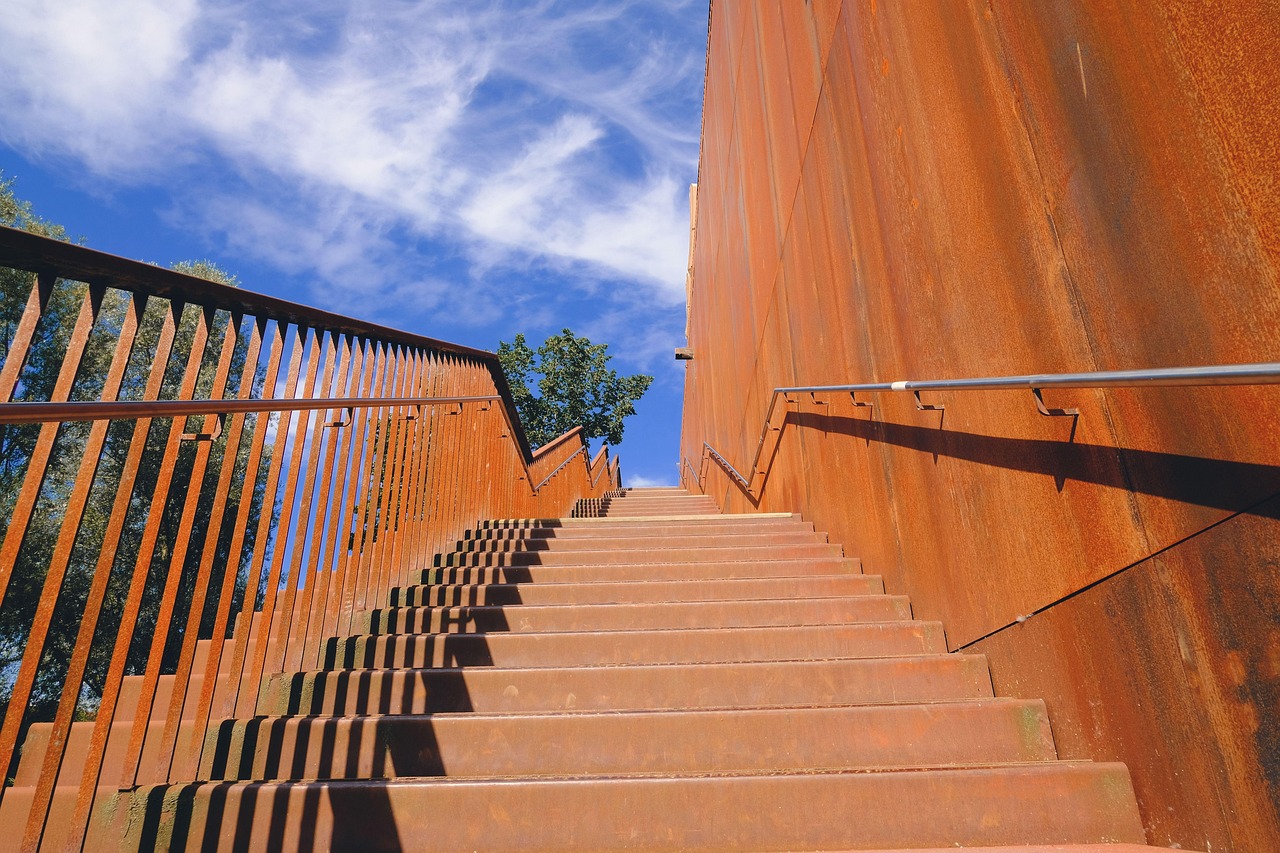
The full development of the protective patina typically takes between six months and one year. The process is most effective in environments with alternating wet and dry cycles. Permanently dry or constantly wet conditions do not support the even development of the patina.
Comparison with Conventional Steel
In conventional carbon steel, corrosion gradually penetrates deeper into the material, which can lead to structural weakening and material failure over time. With Corten steel, corrosion is largely limited to the surface, while the internal structure remains strong even after long-term use.
Popularity of Corten Steel in Architecture
Visual Impact
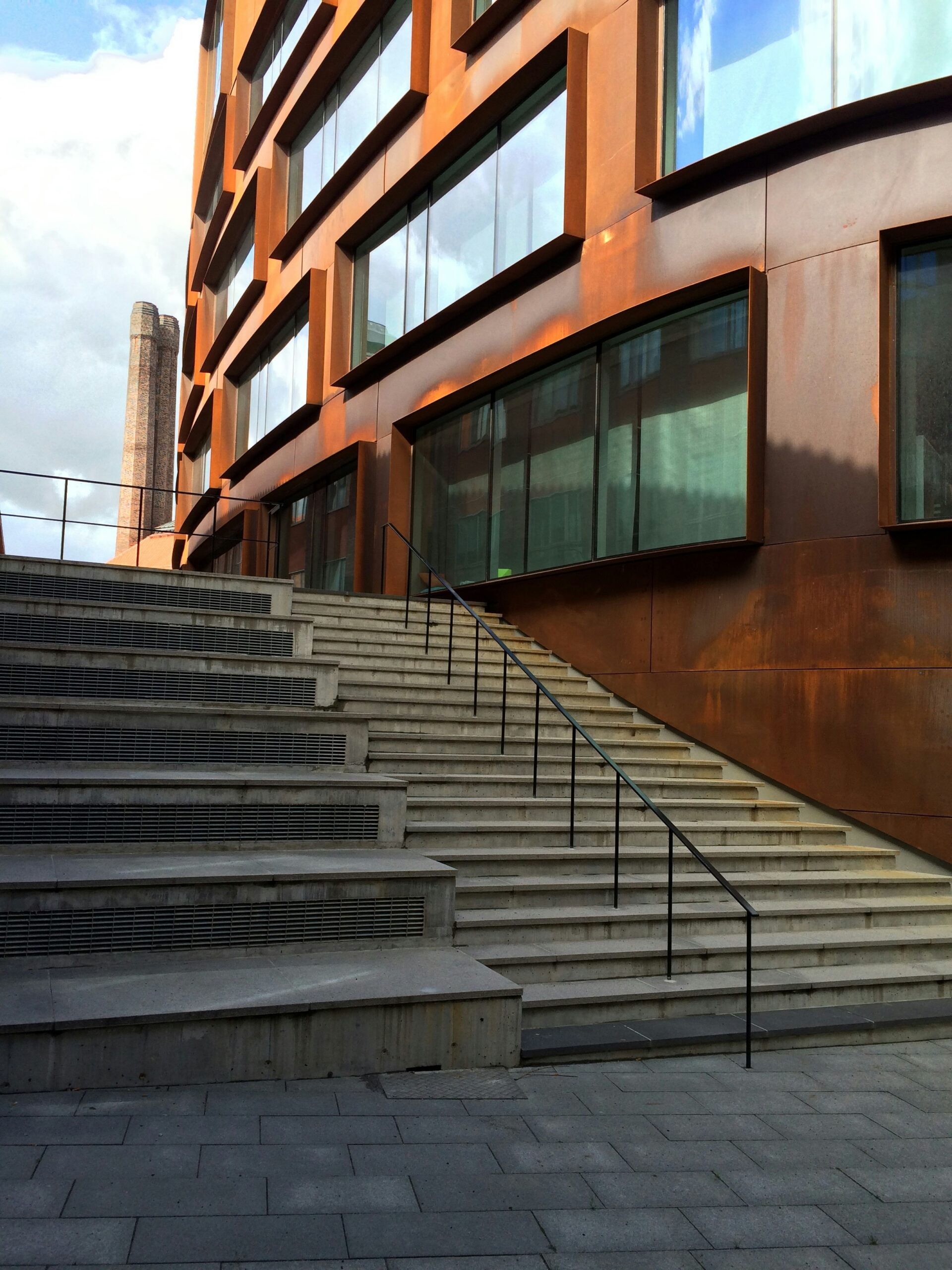
One of the main reasons Corten steel is highly valued by architects is its distinctive appearance. The warm, brownish rust tone that forms on the surface creates a natural and textured look that blends well with both urban and natural environments. The evolving patina gives buildings and structures a unique character that develops over time.
Durability and Long Service Life
Corten steel can withstand harsh weather conditions without requiring frequent maintenance. The protective layer helps maintain the material’s stability even when exposed to rain, snow, wind, and salty air, making it particularly suitable for outdoor applications.
Low Maintenance Requirements
Once the patina has fully developed, the surface does not need to be regularly repainted or treated with additional protective coatings. This makes Corten steel a cost-effective choice for long-term projects where minimizing maintenance expenses is important.
Environmental Sustainability
Corten steel is an environmentally responsible material choice. Because it does not require continuous chemical coatings or paints, the environmental impact is reduced. In addition, the steel is fully recyclable, which helps conserve natural resources and supports sustainable construction practices.