Why and How to Support Flowers
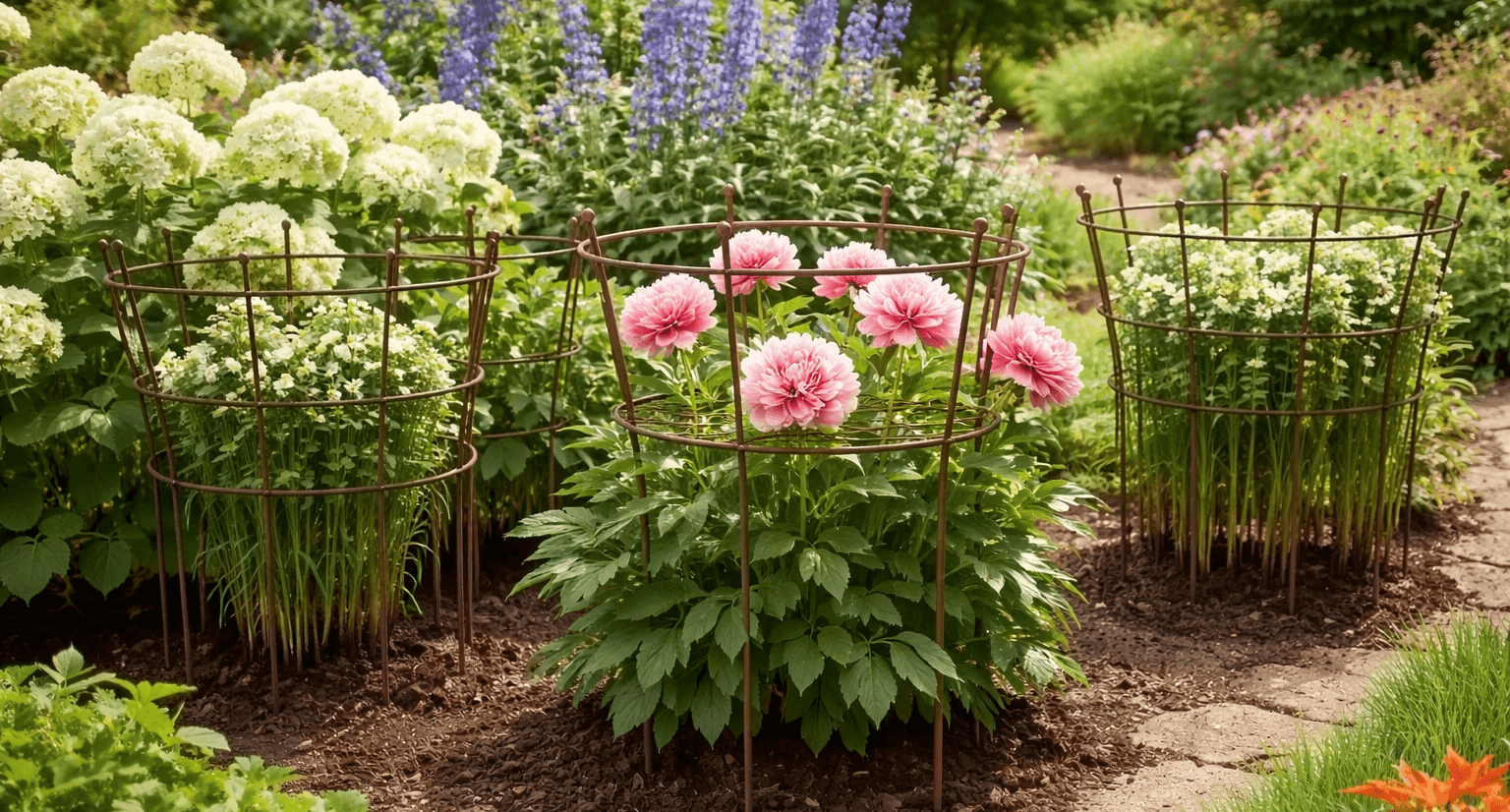
The main reasons why flowers in gardens tend to “fall over” generally fall into two categories:
(1) the flower heads are too heavy for the stems (such as peonies, dahlias, and hydrangeas), and
(2) the stems are tall and fragile in wind or rain (for example delphiniums, foxgloves, gladioli, and tall hollyhocks).
A widely recommended principle in gardening—supported by both horticultural organizations and university guidance—is simple: install supports early (in early spring), before the plant grows large. When supports are placed early, the plant grows naturally through them. This makes the support less visible and reduces the risk of damaging the stems later.
The most reliable support solutions generally fall into two types:
-
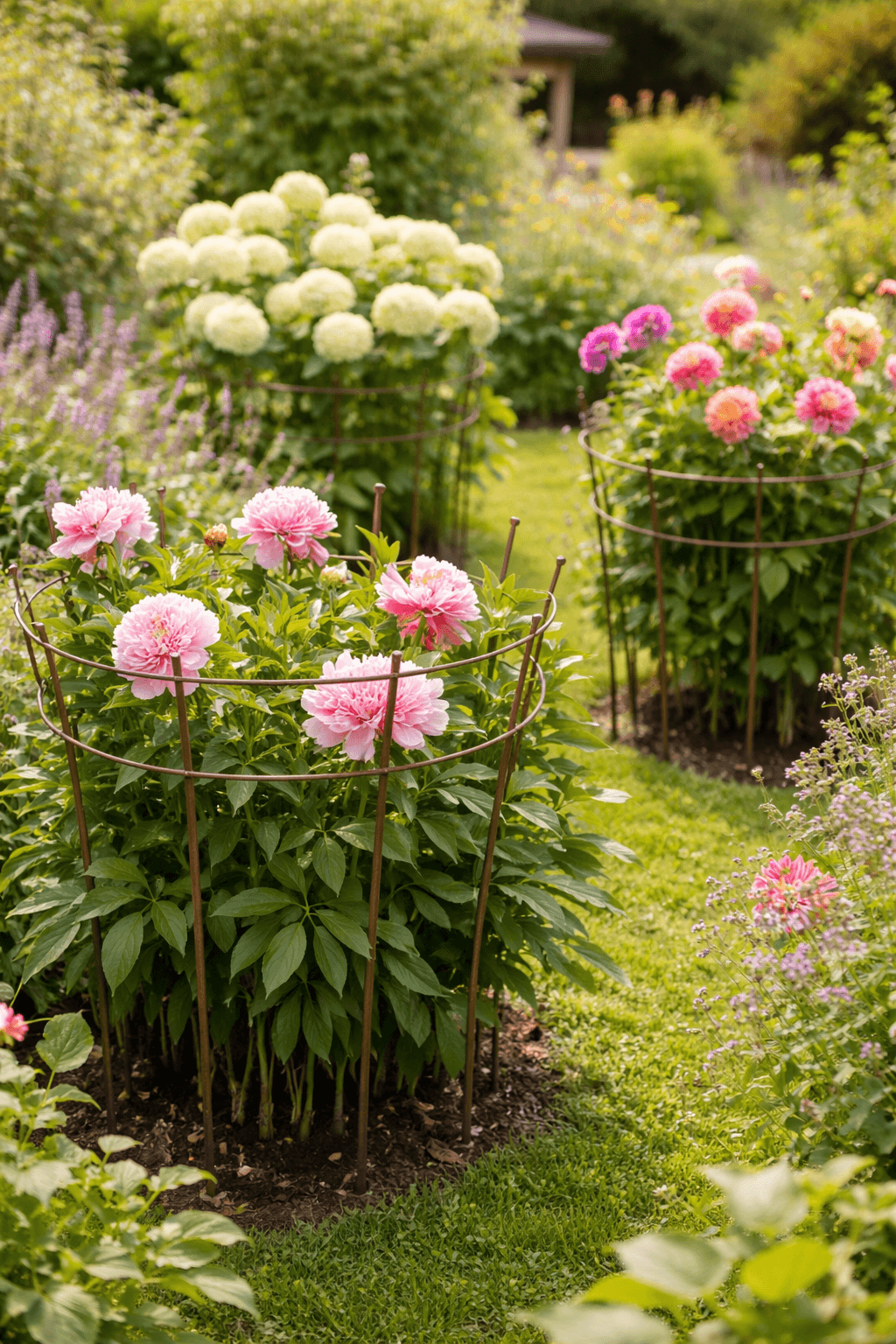
Grow-through rings, grids, or cages
These supports shape and hold the plant from within the clump. They work especially well for peonies, phlox, dahlias, and ‘Annabelle’ hydrangeas. -
Single stakes (bamboo or steel) with soft ties
Best for plants with individual tall flower stems, such as lilies, delphiniums, foxgloves, and gladioli.
In Northern climates, three practical “climate filters” influence the choice of supports:
-
Wind and heavy rain – increase the risk of stems bending or breaking.
-
Snowfall and wet snow – can twist or compress supports if they are left in beds during winter.
-
Freeze–thaw cycles combined with moisture – accelerate corrosion and make plastics more brittle due to UV exposure.
Because of these conditions, a low-risk strategy commonly used across Northern European garden cultures (Baltics–Germany–Scandinavia) is to:
-
Use durable metal supports (powder-coated or galvanized) anchored firmly into the soil.
-
At the end of the season, remove ties and nets and clean or disinfect reusable supports.
This helps prevent plant diseases from overwintering and extends the lifespan of the materials.
Regional Context of Flower Supports
To understand what plants thrive in the Baltic garden climate, the Tallinn Botanic Garden provides a good indicator. It notes that in Estonia’s climate, flowers such as peonies, garden phlox, and lilies bloom from early spring to late autumn, and hundreds of perennial species—including peonies and phlox—are cultivated in the botanical garden’s perennial collections.
In Scandinavia, winter conditions strongly influence support choices. In Sweden, large amounts of snow can fall within a short period, and wind can create snowdrifts. This poses a direct risk not only to shrubs but also to garden structures and plant supports if they are left in beds and act as “snow shelves”. Swedish meteorological analyses also highlight connections between storms, strong winds, and snowfall, explaining why stronger and well-anchored supports are often preferred in northern gardens.
Regional Overview: Flowers That Commonly Need Support
In the Baltic region, the plants found in a “classic perennial flower bed” largely match the general practices of Northern Europe. In Estonia, peonies and garden phlox are widely grown, and lilies are also well suited to the local garden climate.
In practice, gardeners also frequently deal with summer plants and tubers that require support or seasonal lifting:
-
Dahlias – especially tall varieties that often need support. Their tubers are usually dug up in autumn and stored for winter in colder climates.
-
Gladioli – planting depth (for stability) and early staking are important; their corms are often lifted for winter storage.
-
Delphiniums and tall phlox varieties – staking is often part of regular maintenance during the growing season.
In Germany, these same classic support-requiring plants are very common. German horticultural advice explicitly notes that large perennials—such as delphiniums, asters, phlox, many dahlias, and peonies—benefit from supports because they help prevent plants from collapsing or breaking during wind and heavy rain. (Germany’s climate varies greatly—from coastal regions to the foothills of the Alps—so wind, rainfall, and winter length differ regionally, although the mechanics of plant support remain the same.)
In Scandinavia, the basic principles of staking are similar, but practical emphasis shifts slightly:
-
Supports are installed very early and discreetly, because once plants are tall it may already be too late.
-
Gardeners often prefer natural or flexible solutions (such as twig domes or bamboo stakes) or strong metal frames that can withstand wind and be removed before heavy snow.
In addition, activities by Swedish horticultural societies—such as workshops on making peony supports—and Norwegian gardening materials both show that peonies and dahlias are central plants in everyday gardening practice in the region.
| Taim | Kõrgus ja kasvukuju | Soovitatud tugitüübid | Kuidas paigaldada (ajastus ja asetus) | Talv, reguleeritavus ja hooldus |
|---|---|---|---|---|
| Pojeng (Paeonia spp., eriti P. lactiflora hübriidid) | Enamik aedpojenge u 60–90 cm, puhm lai 1–1,5 m. | Grow-through metallrõngad, võrguga ringtoed, taimetugede “puurid”. | Paigalda varakevadel, kui lehed alles avanevad; rõngas umbes pool taime lõppkõrgusest, et taim kasvaks toest läbi. | Hooaja lõpus eemalda sidemed ja puhasta korduskasutatavad toed. Lumistes piirkondades on parem rõngad talveks eemaldada. |
| Puishortensia (Hydrangea arborescens ‘Annabelle’) | Mitmevarreline põõsas umbes 0,9–1,5 m. | Põõsaraam, suur ring- või võrgutoestus. | Paigalda varakevadel enne kui võrsed on pikad. | Puhasta metalltoed ja vajadusel eemalda talveks, et lumeraskus neid ei painutaks. |
| Kukekannus (Delphinium) | Belladonna 1–1,2 m, Elatum 1,5–2 m; laienev puhm. | Oksatoestus, mitu tugikeppi ringis, metallvõrk või üksikvai. | Paigalda enne kui taim on umbes 30 cm kõrgune. | Taimi jagatakse iga paari aasta järel; hooaja lõpus puhasta toed. |
| Daalia (Dahlia) | Tavaliselt umbes 1,2 m, mõned sordid üle 2 m. | Tugev vai või mitu vaiakest koos nööriga. | Parim on vai panna juba istutamise ajal. | Varred lõigatakse sügisel tagasi ja mugulad talvituvad külmavabas kohas. |
| Gladiool (Gladiolus) | Kõrged õisikuvarded sõltuvalt sordist. | Üksikvai iga õievarre juurde või võrk. | Vai panna piisavalt eemale mugulsibulast. | Paljud sordid võetakse talveks üles ja hoitakse kuivas. |
| Kõrged liiliad (Lilium) | Võivad kasvada 1–2,5 m. | Üksikvai ja pehme sidumine. | Vai lisatakse enne pungade avanemist. | Pärast hooaja lõppu eemaldatakse sidemed ja toed puhastatakse. |
| Aedfloks (Phlox paniculata) | Umbes 0,8–1,2 m. | Bambusvaiad, oksad või ringtoed. | Pane tugi enne õite ilmumist. | Sügisel lõigatakse taim tagasi ja toed puhastatakse. |
| Lupiin (Lupinus polyphyllus) | Püstine püsik umbes 1–1,5 m. | Ringtoed või vaiad. | Paigalda varakult enne õievarte täispikkust. | Toe vajadus sõltub tuulest ja kasvukohast. |
| Rebasesõrmkübar (Digitalis) | Õisikud 30 cm kuni 2 m. | Bambusvai ja nöör. | Toeta eriti tuulistes kohtades. | Paljud on kaheaastased; toed võib järgmisel aastal uuesti kasutada. |
| Tokkroos (Alcea rosea) | Väga kõrge taim. | Tugev vai või tugi aia või seina kõrval. | Seo kasvades mitmest kohast. | Puhasta toed ja eemalda haiged taimeosad. |
| Piimjas kellukas (Campanula lactiflora) | Puhmikuline püsik. | Oksad või vaiad. | Toesta varakult hooaja alguses. | Puhmiku kasvades võib vaja minna suuremat toestust. |
Material Choice, Durability in Northern Climates, and Maintenance
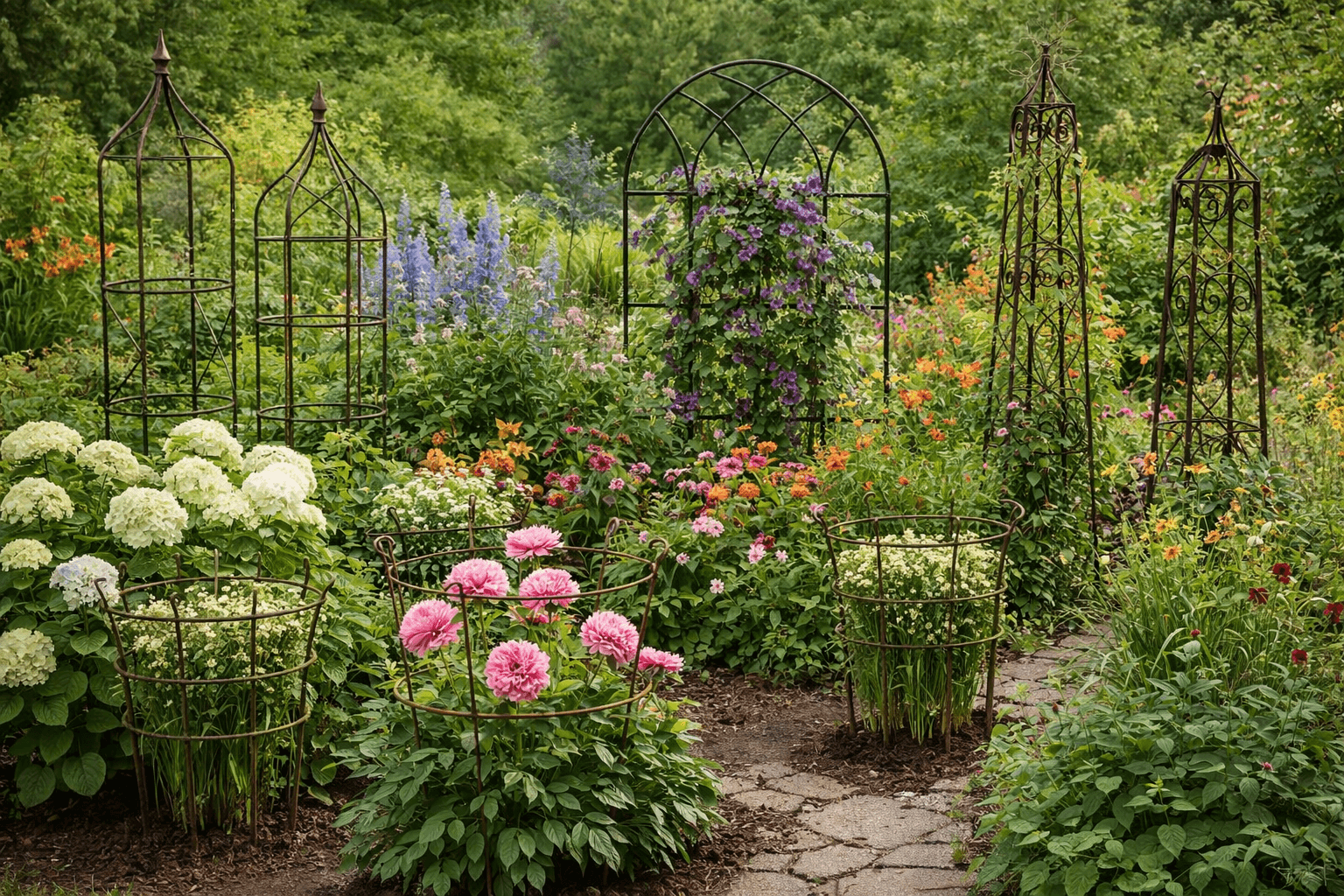
Metal (galvanized, powder-coated, plastic-coated steel)
Metal supports are generally the most durable option, provided they are protected against corrosion. University gardening recommendations often mention plastic-coated steel supports and metal grids as effective solutions for large or “floppy” plants and emphasize that they can last for many years.
Manufacturers also reflect this trend: specialized supports for hydrangeas or perennials are often marketed as “frost proof”, “weather resistant”, and “UV resistant”, typically made from powder-coated steel—a specification well suited to Northern European conditions.
Bamboo and wood (including natural branch supports)
Bamboo is a lightweight, inexpensive, and quick solution, but it usually needs to be checked every season because it can split, develop mold, or break. Gardening advice from organizations such as RHS and Scandinavian sources traditionally recommends bamboo for tall plants prone to toppling, such as hollyhocks and foxgloves, or as base stakes for support systems.
Another very practical method is branch support structures. Danish gardeners often describe creating a dome or lattice from branches before the plant begins active growth. This spreads stems more evenly and becomes almost invisible once the plant fills out. From a low-carbon gardening perspective, the RHS also notes that supports can be woven from natural materials such as hazel, dogwood, or birch, reducing the need for plastic.
Plastic and synthetic nets
Plastic netting can be useful in some situations, for example in large cut-flower beds, but durability and recycling can be challenges. University guidance notes that nylon netting is difficult to separate from plant debris at the end of the season and cannot be composted.
If plastic supports are used, it is best to choose UV-resistant and reusable options and remove them at the end of the season before they effectively turn into garden waste within the flower bed.
Tying and maintenance (disease and mechanical damage risks)
There are two widely recommended “golden rules” of tying plants:
-
Do not tie stems too tightly.
-
Use the figure-of-eight method, which prevents the string from rubbing the stem against the stake.
Good garden hygiene is also important. Structures such as trellises, tomato cages, and other plant supports can carry plant diseases over winter. For this reason, they are often recommended to be cleaned—and sometimes disinfected—in autumn. The same applies to ties and clips, and metal supports may benefit from a light coat of oil if stored outdoors until spring. Similar principles are widely recommended in university guides covering cleaning and disinfecting garden tools and equipment.
Climate-Related Considerations
Because of regional climate conditions, several practical factors influence support choices:
-
Wind and heavy rain
Gardening guidance from RHS highlights that strong rain combined with wind is one of the main reasons perennials collapse. Therefore supports must be firmly anchored so the plant does not twist or fall over together with the support. -
Snow load
Swedish civil preparedness information describes situations where very large amounts of snow can fall in a short time. In such conditions, rings or frames left in flower beds can collect snow and become deformed. -
Storm exposure
Meteorological analyses by SMHI show how wind and storms interact with other extreme weather events, including snowfall. In gardening practice this means that a support adequate in a sheltered inland garden may not be strong enough in coastal or exposed locations.